Awards and prizes
Creative Writing awards and prizes
The Sparks Prize
Awarded to a distinguished graduate of the Creative Writing Program as a post-graduation year of residency and writing time, funded by Nicholas Sparks and judged by an external writer. Based on the quality of writing and the likelihood that the submission will be published or will be developed into a publishable book.

2026 Winner: Daryna Gladun, for Remembrance Day
2026 Judge Lance Olsen's comments:
"What I love most about Remembrance Day, an excerpt exploring two kinds of combat, growing old and military foolishness, about the intergenerational power of land on us and in us, is its wisdom, its empathy for its eightysomething widower-protagonist, its researched command of its material, its muscular use of a second-person focalization that works to enmesh the reader in its thematics, its elegiac rhythms, and its surprising use of language and shape. This is an extraordinary opening to what I am confident will be an extraordinary novel."
Institute for Social Concerns International Justice Poetry Fellowship
This new annual fellowship supports a post-MFA poetry project related to international justice. The ISC-IJ Fellow will be in residence at the Institute for Social Concerns and receive an additional year of research, reading, and writing. The winner also gives a public reading the following spring.

Helen Quah is a British poet and doctor who has lived and worked in London for the last ten years. Her debut chapbook Dog Woman (Out-Spoken Press) won the Eric Gregory Award in 2023 and her poetry has been featured in places such as Lana Turner, PROTOTYPE, and The Poetry Review. She has received support from Tin House Writer’s Workshop, the Liu Institute, and the Notre Dame Arts Initiative for a performance piece entitled “In Obedience to your Desire,” exploring the history of Chinese and Indian indentureship in the Caribbean.
The Mitchell Award
The Mitchell award is designed to honor one MFA second-year student for their special contributions to the Creative Writing Program, namely for distinguished achievement and contributions during residency. It recognizes the student who has been the most involved citizen in the program and one of its best writers.
2026 Winner: Adriana Toledano Kolteniuk

Adriana Toledano Kolteniuk is a writer from Mexico City who spent her formative years in the US and has been a bilingual, bi-cultural bridge-builder since. She obtained her degree in English Literature from UNAM and then spent eight years in Chiapas, where she (re)discovered her passion for wild nature, community building, and social justice. She considers herself an ecofeminist thinker who creates verbal-affective ecosystems from a queer, neurodivergent, anti-colonial lens. Adriana is a recipient of the Fulbright-García Robles Grant for Mexican citizens to pursue postgraduate studies in the US.
The Samuel and Mary Anne Hazo Poetry Award
The recipient's work reflects Hazo's humanistic aesthetic/ideals and commitment to poetic craft. Selected by unanimous decision from current poetry faculty and based upon thesis, student's class performance, and contribution to the creative writing community and the MFA program.
2026 Winner: Helen Quah
Helen Quah is a British poet and doctor who has lived and worked in London for the last ten years. Her debut chapbook Dog Woman (Out-Spoken Press) won the Eric Gregory Award in 2023 and her poetry has been featured in places such as Lana Turner, PROTOTYPE, and The Poetry Review. She has received support from Tin House Writer’s Workshop, the Liu Institute, and the Notre Dame Arts Initiative for a performance piece entitled “In Obedience to your Desire,” exploring the history of Chinese and Indian indentureship in the Caribbean.
Undergraduate awards and prizes
Outstanding Creative Writing Student
This award goes to the graduating senior who has excelled in creative writing.

2026 Winner: Coby McKeown
Billy Maich Academy of American Poets Prize
The Billy Maich Prize is awarded to the Notre Dame student, graduate or undergraduate, for excellence in poetry, recognizing for the best group of poems from among those submitted. Students may enter no more than five poems and are encouraged to limit their entries to 250 lines.

2026 Winner: Rina Shamilov
Richard T. Sullivan Award For Fiction Writing
The Richard T. Sullivan Award for Fiction is awarded to recognize the undergraduate student who submits the best fiction manuscript. Entries may be a short story or a chapter from a novel. Only one submission per student.

2026 Winner: Kali Spalding
Ernest Sandeen Poetry Award
The Ernest Sandeen Poetry Award is awarded to recognize the undergraduate who submits the best group of poems. Students may enter no more than five poems and are encouraged to limit their entries to 250 lines.
2025 Winner: Ashley Hedge

Program awards and prizes
Sandeen Prize in Poetry
The Ernest Sandeen Prize in Poetry was sponsored by the Creative Writing Program in the Department of English at the University of Notre Dame in conjunction with the University of Notre Dame Press. The prize was awarded to an author who has published at least one volume of poetry (authors who are graduates of the University of Notre Dame are not eligible.)
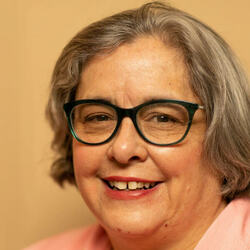
2022 Winner: Sheryl Luna
Magnificent Errors is a collection of poems that shows how mental health challenges can elicit beauty, resiliency, and hope.
In 2005, Sheryl Luna burst onto the poetry scene with Pity the Drowned Horses, which quickly became a classic of border and Southwest literature with its major point of reference in and around El Paso, Texas. Now with the poems in Magnificent Errors, Luna’s third collection and winner of the Ernest Sandeen Prize in Poetry, Luna turns her gaze toward people living on the margins—whether it be cultural, socioeconomic, psychological, or personal—and celebrates their ability to recover and thrive. Luna reveals that individuals who suffer and experience injustice are often lovely and awe inspiring. Her poems reflect on immigrants in a detention camp, a meth addict, a homeless individual, and someone on food stamps. She explores the voices of people with schizophrenia, bipolar disorder, or PTSD, poets, visual artists, and people living in a mental health community setting. The author’s own journey to recovery from childhood abuse and mental illness also illuminates how healing is possible.
The poems in Magnificent Errors are lyrical, narrative, and often highly personal, exploring what it means to be the “other” and how to cope with difference and illness. They venerate characters who overcome difficulties including ostracism and degradation. People who live outside of the mainstream in poverty are survivors, and showing their experience teaches us compassion and kindness. Ideas of art, culture, and recovery flow throughout the poems, exploring artistic creativity as a means of redemption. With language that is fresh and surprising, Sheryl Luna shares these remarkable poems that bring a reader into the experiences of marginalization and offer hope that grace and restoration do indeed follow.
Sullivan Prize in Short Fiction
The Richard Sullivan Prize in Short Fiction was sponsored by the Creative Writing Program in the Department of English at the University of Notre Dame in conjunction with the University of Notre Dame Press. The Prize was awarded to an author who has published at least one volume of short fiction (authors who are graduates of the University of Notre Dame are not eligible.)
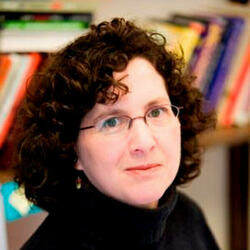
2022 Winner: Maya Sonenberg
In these dense and startling stories, Maya Sonenberg telescopes seasons, decades, and generations in candid depictions of women’s family lives.
What happens when the urge to ditch your family outpaces the desire to love them? The stories in Bad Mothers, Bad Daughters, winner of the Richard Sullivan Prize in Short Fiction, attempt to answer this question, heading straight for the messiness of domestic relationships and the constraints society places on women as they navigate their obligations. Daughters desert their rheumy-eyed elders in dusty museums, steal a mother’s favorite teacup, or consider throwing their dead parents’ nostalgia-riddled belongings out the window. Mothers conclude that they love one child more than their others. Fathers puzzle over a wife’s inability to balance family and career or accuse a partner of blaming their child for her own misdeeds. Women mourn the children they decided not to have and fret over the legacy they’ll leave the children they do have. But sometimes the generations reconcile or siblings manage to rescue each other. Love tears these people apart, but it mends them too.
The emotions expressed in these stories are combustible, both fraught and nuanced, uncontrollable and common, but above all often ignored or hushed because we’re not supposed to be bored by our children or annoyed with our aged parents, even as we love them. The careful shapes of these stories adapted from fairy tales, verse, letters, or newspaper announcements, the surprise of their wordplay, and the blaze of their lyrical sentences allow them to dig into and contain all those messy emotions at the same time. In these works, constraint creates both understanding and fire.
Sandeen and Sullivan Prizes
The Ernest Sandeen Prize in Poetry and Richard Sullivan Prize in Short Fiction were sponsored by the Creative Writing Program in the Department of English at the University of Notre Dame in conjunction with The University of Notre Dame Press. Both series are now complete and are not accepting new submissions. Beginning in 1995, the prizes were awarded to authors who had previously published at least one volume of short fiction or one volume of poetry and helped bridge a gap in publication support between an author’s debut and becoming an established author. To learn more about or purchase a copy of these award-winning books, please visit the Notre Dame Press website for the Ernest Sandeen Prize in Poetry and the Richard Sullivan Prize in Short Fiction.
Ernest Sandeen was a professor of English at the University of Notre Dame from 1946 until his retirement in 1978. He was an award-winning teacher. His poems appeared in such journals as the Hudson Review, Poetry and the New Yorker. He published six volumes of poetry in his lifetime and served as emeritus professor of English at the University of Notre Dame until his death in 1997. His Collected Poems 1953 – 1994 was published in 2001.
Richard T. Sullivan graduated from Notre Dame in 1930 and joined the University’s faculty as a writing instructor in 1936. In addition to writing numerous book reviews for the New York Times and the Chicago Tribune, he published several short story collections and novels, including The World of Idella May, The Three Kings, Summer After Summer, The Dark Continent, and First Citizen. A popular undergraduate teacher, he is remembered for his description of writing as “hard work requiring patience and idiotic perseverance.” He died in 1981.